
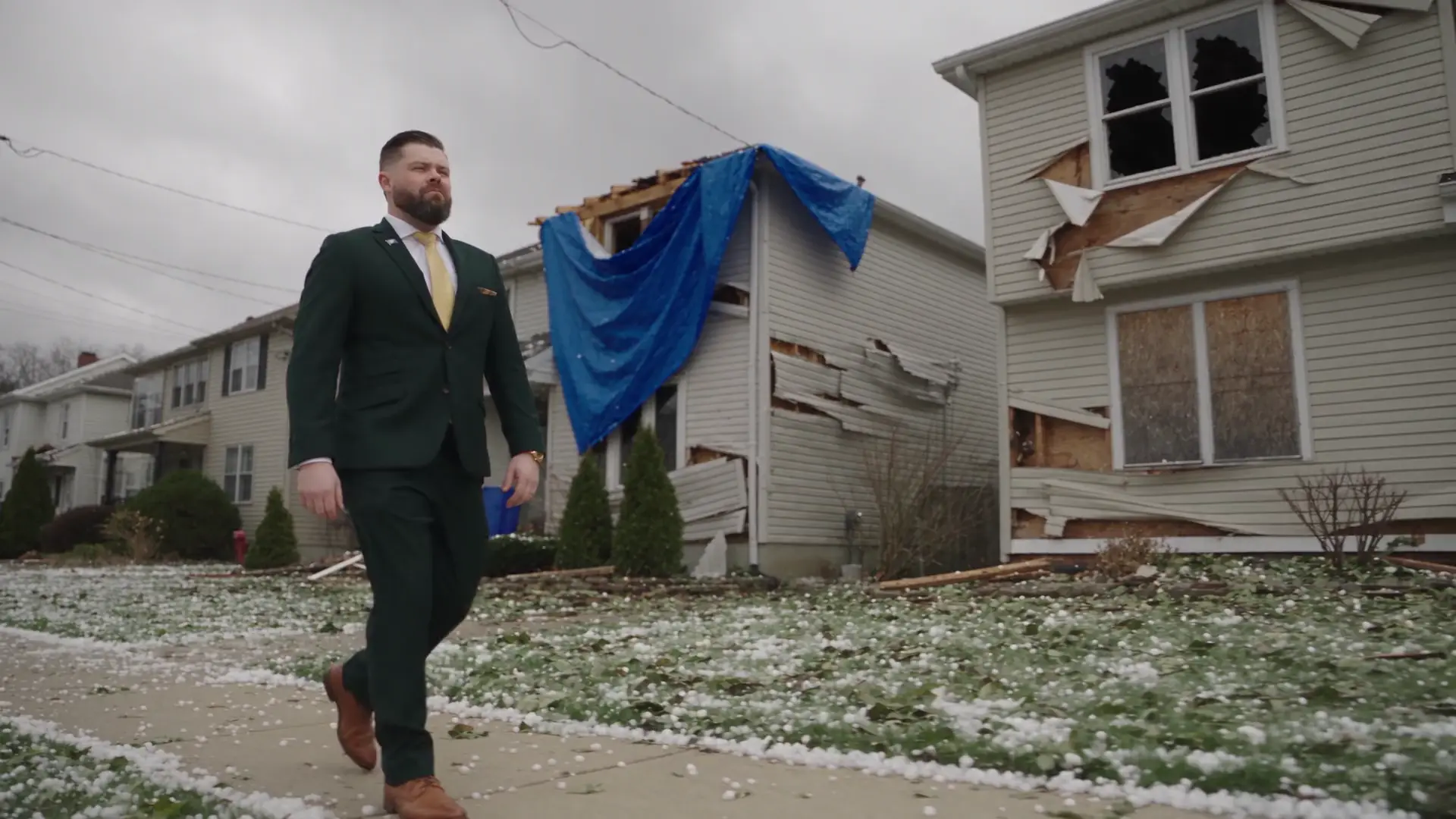
The adjuster walked your roof, called the dents cosmetic, and closed the file. Or the check arrived at a fraction of what your roofer says the replacement will cost. Hail claims get shut down more often than almost any other property loss, and the reasons carriers give are usually the same handful.
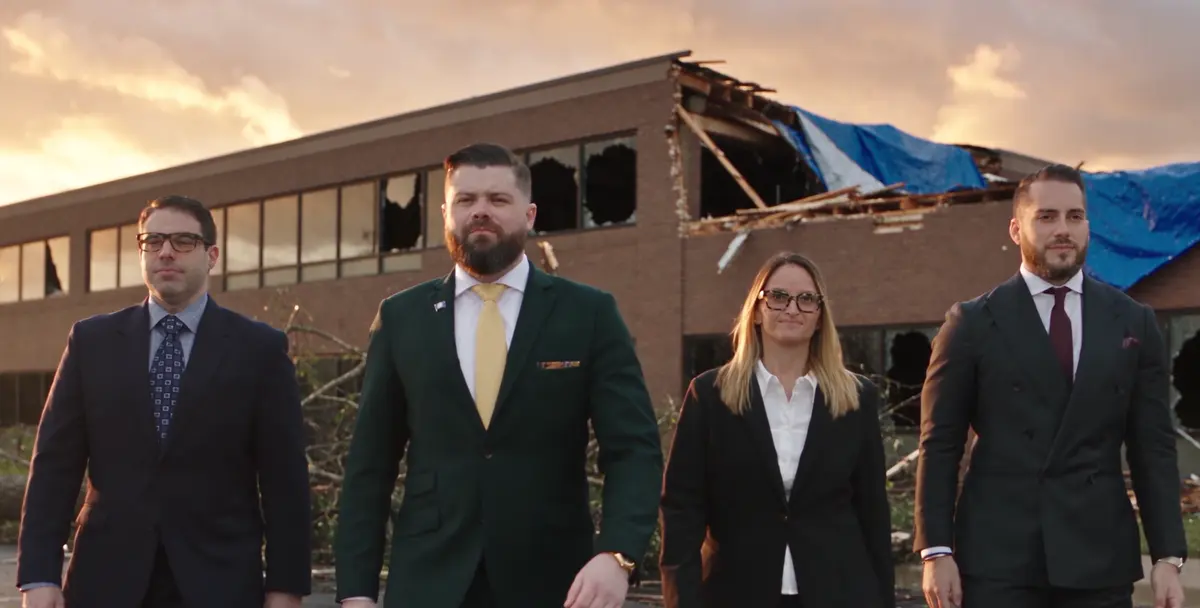
Denham Property & Injury Law Firm represents property owners against their own insurers. We work as a commercial hail damage lawyer for businesses whose roofs, rooftop equipment, and tenants absorbed the storm, and we handle residential hail claims on the same terms. Denied, underpaid, or stalled, the claim becomes ours to push.
If a hailstorm damaged your property and the insurance company is not paying what the policy owes, call (859) 900-BART / 859-900-2278 for a free consultation.
Why Do Insurance Companies Dispute Hail Damage Claims?
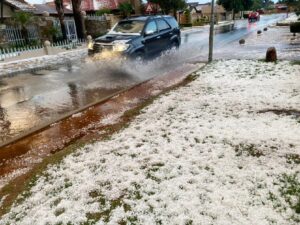
Insurers routinely dispute hail claims because hail damage is easier to argue about than fire or water damage. Hail damage is often subtle. It accumulates over years, and reasonable people can look at the same roof and reach different conclusions. Identifying signs of hail damage is therefore important when evaluating the roof, and carriers know that, so four arguments come up again and again.
The Damage Is Cosmetic, Not Functional
Carriers draw a line between dents that look bad and those that shorten the life of the roof. We bring in roofing consultants who document structural impact, not its appearance.
A dented metal panel or a bruised shingle can lose granules, crack the mat underneath, and fail years early. The Insurance Institute for Business & Home Safety tests roofing systems under simulated hail impact, and its findings frequently support a functional damage argument that the adjusters often dismiss on sight.
No Hail of Sufficient Size Fell at This Location
Insurers pull third-party weather data and deny claims when the reported hail size near your address looks too small to cause damage. Those datasets are built from scattered public reports rather than measurements at your property, and hail size varies sharply within a single storm.
While the NOAA Storm Events Database tracks confirmed hail storms, it often misses localized details. Because these records are frequently incomplete, an insurance denial based solely on this data is often challengeable, especially when documenting the damage after a hailstorm.
The Damage Is Wear and Tear
Age-related granule loss, blistering, and foot traffic all leave marks that a carrier can attribute to time rather than a storm. This argument works best on older roofs, which is exactly when it gets used. We counter this by providing a documented comparison of the roof’s condition before and after the storm.
The Test Square Showed Too Few Hits
Adjusters mark off a ten-by-ten-foot area on each roof slope and count hail strikes inside it, then extrapolate that count across the whole roof. If the square lands on a sheltered slope or misses a concentrated impact zone, the estimate comes in low. Where the adjuster placed those squares is one of the first things we ask about.
Storms don’t always bring one peril at a time. Wind damage during the same storm frequently accompanies hail, and separating the two changes what the carrier owes.
What Is a Cosmetic Damage Exclusion, and Should You Worry About It?

A cosmetic damage exclusion is policy language that lets your insurer refuse to pay for hail damage that affects appearance without affecting function. This exclusion is typically added as a policy endorsement during renewal, often in exchange for a small premium discount, so most policyholders never realize it is there. On a hail claim, it is the single most consequential provision in the policy.
These exclusions show up most often on metal roof systems and on commercial property policies in hail-prone regions. The wording varies widely between carriers, and that variation matters. Some versions exclude only marring and denting of exterior surfaces. Others encompass anything the carrier characterizes as appearance-related.
Two questions decide most of these disputes. Does the endorsement actually apply to the damaged component? And is the damage genuinely cosmetic, or does it shorten the service life of the roof? A denial that leans on this endorsement is not the end of the claim. A careful review of your claim or denial by a hail damage claim lawyer is worth getting before you accept it.
Not sure whether your policy carries one? Call (859) 900-BART / 859-900-2278 and we will review your policy and any included endorsements.
Commercial Hail Damage Claims Insurers Routinely Underpay
Commercial hail claims involve building systems that residential adjusters are not trained to price, and the gaps show up in predictable places. A commercial property damage lawyer’s review of the carrier’s estimate may find entire categories missing rather than line items priced low.
Flat and Low-Slope Roof Systems
Membrane roofs hide hail damage in a way pitched shingle roofs do not. Hail bruises the insulation board beneath a TPO or EPDM membrane without visibly puncturing the surface, and the compromised area holds water and fails later. Core samples show it. A visual inspection from a ladder does not, which can make filing a water damage insurance claim more complicated when the underlying hail damage is not immediately visible.
Rooftop HVAC and Mechanical Equipment
Hail can flatten the aluminum condenser fins on rooftop units, which restricts airflow and drives up energy consumption and compressor wear. Carriers leave this off estimates constantly, or offer to comb the fins rather than replace the coil. On a building with multiple units, the omission can amount to six figures.
Tenant Losses and Business Interruption
A damaged commercial roof means leaks, closed spaces, and tenants who stop paying or invoke rent abatement. Depending on the policy, business interruption or loss-of-rents coverage may apply when covered hail damage closes business or tenant space or reduces rental income. We calculate that exposure alongside the physical damage.
These categories are where commercial hail claims gain or lose most of their value. Our hail damage insurance claim attorneys price all three before responding to any settlement offer.
When Partial Roof Repair Is Not Enough

Partial repair fails when the replacement materials will not match what is already on the building. Shingle lines get discontinued, colors fade, and metal panel profiles change, so a repaired section can end up visibly different from the rest of the roof.
State matching laws and regulations may require an insurer to replace more than the visibly damaged section when a partial repair would not produce a reasonably uniform appearance. Whether that means replacing a larger area or the full roof depends on the policy and the law where the property is located.
An analysis of roof hail damage that an insurance attorney runs on these claims covers three points:
- Whether the existing roofing material remains available in a comparable color and profile
- Whether the policy contains matching or uniform appearance language
- Whether the state where the property sits imposes a matching requirement by statute or regulation
When those answers line up, the claim shifts from a patch to a replacement, and the value changes accordingly.
What Hail Damages Beyond Your Roof
Hail damages far more than roofing, and claims narrow to the roof because that is where the adjuster looks first. The rest of the building envelope takes impacts in the same storm.
| Component | What hail does | Why carriers miss it |
|---|---|---|
| Roofing | Dents, cracked mats, granule loss, membrane bruising | Test square placement, cosmetic arguments |
| Windows and doors | Shattered glass, cracked frames, failed seals | Damage attributed to age or settling |
| Siding and trim | Dents, cracks, punctures in vinyl and aluminum | Called cosmetic under an exclusion |
| Gutters and downspouts | Dents, separation, drainage failure | Treated as incidental |
| Rooftop equipment | Flattened condenser fins, damaged housings | Omitted from estimates entirely |
| Interior | Water intrusion through the compromised envelope | Attributed to a separate, uncovered cause |
Interior water damage caused by a hail-damaged roof may also be covered under the hail claim, depending on the policy and the cause of the water intrusion.
Our Attorneys Take on Roof Hail Damage Insurance Claims From Inspection to Settlement
We take the lead on your hail claim, managing all interaction with your insurance company to protect your interests. The following roadmap outlines the systematic process we use to investigate, value, and secure the compensation your policy owes.
- Policy and endorsement review. We identify the deductible structure, any cosmetic damage exclusion, matching language, and coverage for business interruption or loss of rents before we assess a single shingle.
- Independent inspection. We retain our own roofing consultants and engineers to inspect the property, take core samples where membrane systems are involved, and document impacts across every slope rather than a sampled square.
- The adjuster’s report and estimate. We obtain the carrier’s inspection report, photographs, weather data, and line-item estimate, and we keep them. What the adjuster wrote at the time frequently contradicts the subsequent denial.
- A competing valuation. Our consultants produce a scope of repair and a cost that we can support, covering the roof, envelope, mechanical equipment, and interior.
- Presentation and negotiation. We provide the carrier with the full valuation and the policy language that supports it, and we handle every call and document request from that point forward.
- Appraisal or litigation. When the gap will not close, we invoke appraisal where the policy allows it or file suit and try the case.
Some older claims may still be viable, but notice requirements and filing deadlines can limit your options. Even after repairs are made, photographs, reports, and the insurer’s claim file may provide useful evidence.
Why Policyholders Bring Us Denied Hail Claims

Denham Property & Injury Law Firm works one side of the insurance relationship. We represent policyholders, and we do not take carrier defense work, which means nothing about the claim gets softened for the sake of another client.
Bart Denham founded the firm and leads it as principal attorney. His litigation background includes years handling first-party property disputes in the Tampa Bay market, one of the most heavily litigated insurance environments in the country.
Roofing contractors and restoration companies regularly refer policyholders to us when insurance claims remain disputed. One client came to us that way after repeated denials:
“Denham Property & Injury Law Firm handled our claim professionally from start to finish. They kept us updated every step of the way and fought to get our roof fully covered when the insurance company initially refused.”, Theresa M.
Speak to a lawyer who handles denied hail damage claims today. Consultations are free. You can reach us at (859) 900-BART / 859-900-2278.
Do Hail Claim Rules Change From State to State?
Hail claim rules do vary by state, and the differences affect both what you are paid and what leverage you have when the carrier refuses. Policy forms look similar across the country, but the rules layered on top of them are not.
- Kentucky lets a policyholder sue the insurer directly over unfair claim settlement practices, which gives disputed hail claims a route beyond the contract itself.
- Tennessee may impose additional liability of up to 25% when an insurer refuses to pay in bad faith and the statutory requirements are met.
- Indiana recognizes a common-law duty of good faith that an insurer owes its own policyholder, separate from the terms of the policy.
- Montana allows insureds to bring an independent statutory claim for certain unfair claim-settlement practices.
- Florida requires written notice to the insurer and to state regulators before a bad faith suit can move forward, which gives the carrier a defined window to pay the claim first.
- North Carolina treats certain unfair claim settlement practices as unfair trade practices, and that classification can open the door to damages beyond the policy benefits.
Deductibles differ too. Many policies in hail-exposed regions carry separate wind and hail deductibles calculated as a percentage of the insured value rather than a flat dollar amount, which can turn a five-figure deductible into a six-figure one for a commercial building.
An attorney checking your hail deductible may find the carrier applied the wrong deductible or applied it twice across related damage. Your state insurance department also sets deadlines for how quickly a carrier must acknowledge and decide a claim, and the National Association of Insurance Commissioners lists those regulators by state.
Hail Insurance Claim Questions Our Attorneys Hear Most
How long do I have to file a hail damage insurance claim?
Deadlines can come from both your insurance policy and state law. A policy may require prompt notice and set a deadline for filing suit, while state law can affect how those limits apply. Because missing a deadline can end your claim, have the policy reviewed as early as possible when filing a hail damage insurance claim.
What if my roofer found hail damage but the insurance adjuster did not?
A disagreement between your roofer and the adjuster does not end the claim, and it is one of the most common reasons people call us. Adjusters and contractors inspect differently, and an independent consultant can document what a test square missed.
Will filing a hail damage claim raise my premium?
Possibly yes, though hail is a weather event rather than a fault-based loss, and carriers generally treat it differently from an at-fault claim. Rate changes after widespread storms often apply across an entire region regardless of whether you filed.
Can I still file if the hailstorm happened more than a year ago?
Sometimes yes, particularly when the damage only became apparent later through leaks or a contractor’s inspection. Whether the claim survives depends on the notice and suit-limitation provisions in your specific policy, so it is worth checking rather than assuming.
Does my homeowners policy cover hail damage to my car?
Homeowners insurance does not cover hail damage to your car. If you carry comprehensive auto coverage, that coverage generally pays for hail damage, subject to your deductible.
Do I need a lawyer if the insurer approved my claim but paid too little?
You may benefit from an insurance claim attorney on an underpaid hail claim, and underpayment is more common than outright denial. An approved claim means coverage is no longer in dispute, which often makes the valuation argument more straightforward.
Get a Straight Answer on What Your Hail Claim Is Worth

A denial letter and a lowball estimate may feel like final answers, but very often neither one is. Property owners who challenge those decisions may have options for seeking additional payment.
Bring us the estimate, the denial, or the endorsement you did not know was on your policy. We will tell you what the carrier is doing, what the policy actually requires, and whether the claim is worth pursuing.
Because the leverage against an insurer shifts by state, from Kentucky’s direct right of action to the added penalty available in Tennessee, that conversation also tells you what your options look like where your property sits.
The Insurance Institute for Business & Home Safety publishes research on how roofing systems perform under hail, and the Insurance Information Institute explains standard policy terms, though neither will take the argument to your carrier. We will. Call (859) 900-BART / 859-900-2278 or schedule a free claim review.