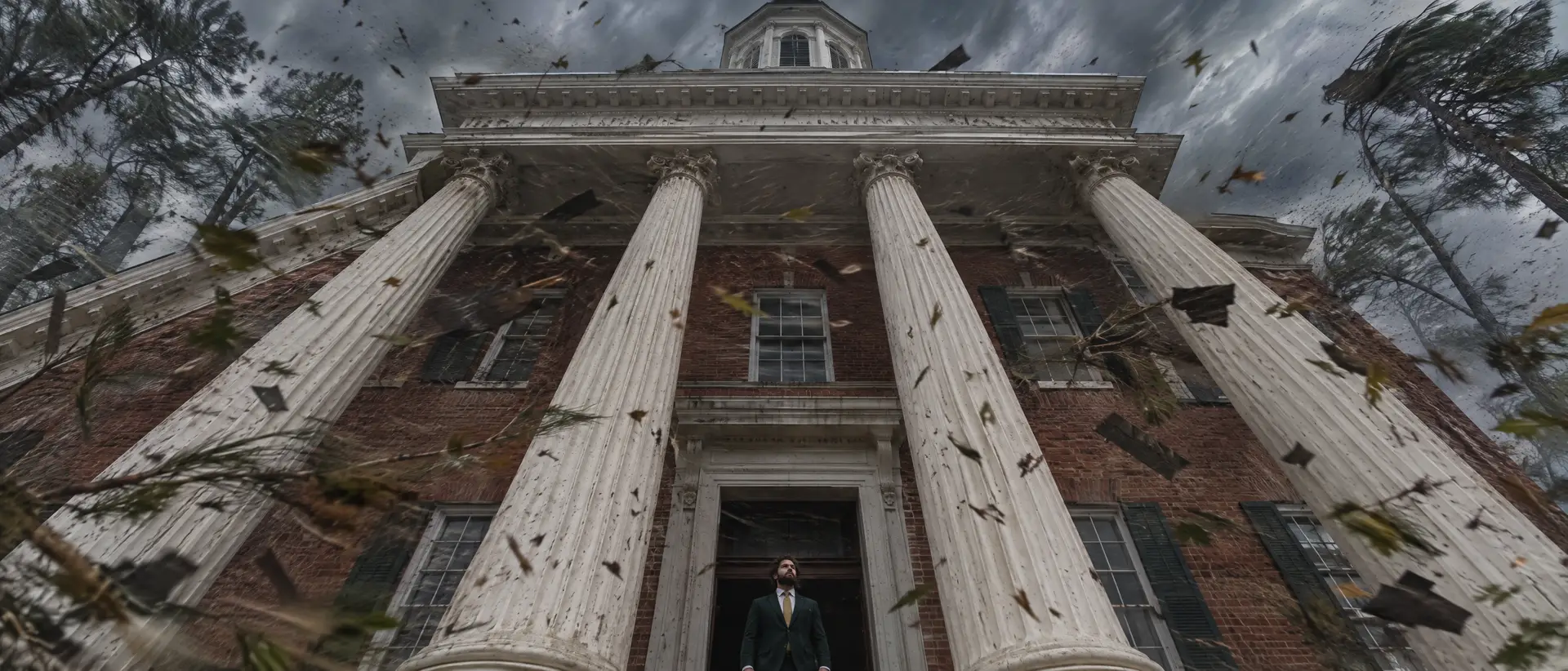
Property insurance claims across North Carolina
North Carolina faces a wide range of weather risks: hurricanes and tropical storms on the coast, flooding along rivers and in the mountains, hail and straight-line winds in the Piedmont, tornadoes, and severe winter weather in the high country. Any of them can do serious damage to a home, a business or a church, and the insurance claim that follows can be its own fight.
Denham Law represents North Carolina homeowners, businesses, churches, and homeowners and condo associations when an insurance company fails to fairly evaluate or pay a property damage claim. We handle hurricane, wind, hail, flood, water and fire claims, and other covered losses. Our North Carolina-licensed attorney is Jacob Busey, who grew up in Concord. We serve clients statewide in North Carolina, from Wilmington and the Outer Banks to Charlotte, the Triangle and the mountains.

Hurricane and named-storm claims, on the coast and inland
On the coast, a hurricane can tear off shingles and siding, break windows and drive rain inside while storm surge pushes water in from below. Inland, Hurricane Helene, in September 2024, brought heavy rain, strong winds, debris flows and river flooding to the North Carolina mountains, far from the ocean. Hurricane claims raise their own issues:
- The named-storm deductible. Many North Carolina policies carry a separate deductible for named storms (hurricanes, tropical storms and tropical depressions), usually a percentage of your dwelling coverage: a 2% deductible on a home insured for $300,000 is $6,000. It typically applies only during a set window tied to National Weather Service watches, warnings and advisories for North Carolina, so check that the right deductible was used.
- Separate wind coverage near the coast. In the beach and coastal areas, some owners buy wind and hail coverage from the North Carolina Insurance Underwriting Association, also called the Coastal Property Insurance Pool, because their main policy leaves wind out. That policy has its own deductible and its own claim.
- More than one insurance company. One storm can mean a homeowners claim, a wind claim and a flood claim at once, and each company may point to the others. We work the claims together to keep damage from falling through the gaps.
Wind or flood: the question behind many storm denials
Standard homeowners policies do not cover flood damage unless flood coverage was added. Water that rises from the ground up, whether from storm surge, heavy rain or an overflowing river, is excluded by most homeowners policies and is generally a flood policy claim. Wind damage, and rain that gets in through openings the wind tears in a roof or wall, is generally a homeowners or wind policy claim. A federal flood policy also has its own definition of a flood, so some water losses may fit neither policy.
After a hurricane, an insurance company may say a ceiling, a wall or a whole floor was ruined by flood water rather than wind, and deny the claim. The physical evidence matters: missing shingles and roof decking, water stains that start at the ceiling, broken windows and damage above the flood line can all point to wind. We gather that evidence with photos, weather data and, when the claim calls for it, inspections by engineers and contractors, and we press the insurance company to pay for what the wind did. More on wind damage claims.
Flood claims under a separate flood policy
Flood coverage comes from a separate policy, most often through the National Flood Insurance Program (NFIP). Building and contents are separate coverages, so check which you have. Claims under a federal (NFIP) flood policy run on tight deadlines (private flood policies set their own):
- Report the flood right away, and photograph everything before anything is thrown out.
- The paperwork supporting your claim, including a signed and sworn proof of loss, is due within 60 days of the flood unless FEMA extends that deadline in writing. Do not count on a verbal extension from an adjuster.
- If the claim is denied in whole or in part, you can appeal to FEMA within 60 days of the date on the denial letter, and you have one year from the first written denial to file a lawsuit in federal court. An appeal does not extend that year.
Read more about flood insurance claims.
Roof and hail claims in the Piedmont
Spring and early summer thunderstorms can bring hail and straight-line winds across the Piedmont, from Charlotte and Concord to Greensboro, Winston-Salem, Raleigh and Durham. Hail can crack shingles and dent metal roofing, gutters and HVAC units, and the damage is often hard to see from the ground.
Roof claims are often disputed. The insurance company may call the damage wear and tear, blame an older storm, call dents cosmetic, or offer to replace a handful of shingles on a roof that cannot be repaired that way. We review the roof damage and the policy, and push for a payment that covers a proper repair or replacement. Learn more about hail damage claims and roof damage claims.
Denied, delayed and underpaid claims
- Denied claims: the insurance company says the loss is not covered, blaming flood, wear and tear, old damage, late notice or a policy exclusion.
- Delayed claims: weeks or months pass with repeated requests for the same documents, new adjusters and no decision.
- Underpaid claims: the claim is accepted, but the estimate leaves out damaged areas, uses prices local contractors will not match, or takes heavy depreciation.
North Carolina law lists unfair claim practices insurance companies are not supposed to engage in, such as refusing to pay a claim without a reasonable investigation, not trying in good faith to settle promptly and fairly once liability is reasonably clear, and failing to promptly explain the reason for a denial. When an insurer handles a claim that way, we press it to meet its obligations. See bad faith insurance claims.
Deadlines to keep in mind
Your policy sets its own rules after a loss, such as prompt notice, a signed and sworn proof of loss by a set deadline, and letting the insurance company inspect the damage. Missing one can give the insurer a reason to deny or cut the claim.
For many North Carolina property policies, the time to file a lawsuit is three years, counted from the date of the loss, not from the date the claim was denied. Federal (NFIP) flood policies are different: one year from the insurance company's first written denial of all or part of the claim. Private flood policies set their own deadlines. These deadlines can run out while a claim is still being negotiated, so get advice early.
What we do for North Carolina clients
- Review the claim. We read your policy, the insurer's letters and estimates, and your photos, and tell you where you stand.
- Build the claim. We document the damage, with inspections and estimates from contractors and engineers when the claim calls for it.
- Deal with the insurance company. Calls, letters and adjuster meetings go through us, and we press for full payment under the policy.
- Appraisal or a lawsuit when needed. Many property policies have an appraisal clause for disagreements over the amount of the loss. When the insurer still will not pay what the policy owes, we can take the claim to court.
When to call
- Your claim was denied, in whole or in part.
- The payment will not cover your contractor's estimate, or weeks have passed without a decision.
- A large named-storm deductible was applied and you are not sure it should have been.
- You are asked to sign a proof of loss, release or settlement you do not understand, or a deadline is coming up.
The consultation is free. Our fee is a share of what we recover, so you pay no attorney fee unless we recover money for you.
Call (859) 900-BART (2278) or contact us online to talk about your North Carolina claim.