

Straight-line winds stripped shingles off your roof, and your insurer is calling it wear and tear. Or water came through the ceiling after the storm, and the adjuster labeled it a maintenance problem. Wind claims hinge on arguments most policyholders never see coming.
We represent property owners against their own insurance companies. Our wind damage lawyers handle straight-line wind, thunderstorm gusts, derechos, and windstorm losses, and take on the interior water damage that follows once wind opens the building.
If a windstorm damaged your property and the claim stalled, call (859) 900-BART (2278) for a free consultation.

What Does a Wind Damage Insurance Claim Cover?
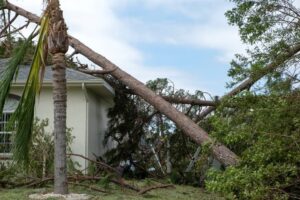
A wind damage claim covers the parts of your property that wind physically damaged, plus the interior damage that follows once the building envelope is breached. Standard homeowners and commercial policies treat windstorms as a covered peril, though the payout for wind damage insurance claims depends on how carefully the loss is documented.
Roof Covering and Decking
Wind lifts shingles at the edges, breaks the adhesive seal, and leaves the roof looking mostly intact from the ground. Wind-lifted and missing shingles are only the visible layer. Underlayment tears and decking separation happen underneath, and both go unpriced when nobody looks past the surface, which is why assessing wind damage to roofs and siding requires looking beyond what is immediately visible.
Siding, Windows, and Doors
Wind pressure cracks siding panels, pulls trim loose, and forces water past window and door seals. Impact from wind-driven debris breaks glass and dents metal cladding. Failed seals are easy for an adjuster to attribute to age rather than the storm.
Fences, Detached Structures, and Landscaping
Detached garages, sheds, carports, and fencing usually fall under a separate coverage limit calculated as a percentage of the dwelling amount. Carriers often apply that limit incorrectly or overlook the coverage entirely.
Interior Damage From Wind-Driven Rain
Once wind creates an opening, rain enters and damages ceilings, drywall, insulation, flooring, and belongings. This is the most heavily disputed category in a wind file, and it is the reason most people call an attorney about a wind damage insurance claim.
Related losses sit close by. A tree falling on the house during a windstorm creates a claim with its own removal and repair rules.
According to the National Severe Storms Laboratory, damaging winds fall into eight distinct types, each causing unique structural impacts.
Want to know what your policy actually covers here? Call (859) 900-BART (2278) and we will read it with you.
Why Do Insurers Deny Interior Water Damage After a Windstorm?
Insurers deny post-storm interior water damage by arguing that no wind-created opening let the water in. Most policies cover rain damage to the inside of a building only when wind first damaged the roof, wall, window, or door. Without that opening, the carrier treats the water as a maintenance failure and pays nothing for it, making filing a water damage insurance claim more difficult.
That single requirement decides an enormous share of wind claims. The exterior damage might be modest while the interior damage runs into six figures, and the carrier’s whole position rests on whether the opening existed.
What Establishes a Wind-Created Opening
Proving the opening is an evidence problem, and it gets harder the longer the claim sits. The material that works includes:
- Photographs of the roof, walls, and windows taken before repairs or tarping covered the damage
- Weather records showing wind speeds and gust timing at or near the property
- A roofing consultant’s assessment identifying lifted or fractured components and the path water traveled
- Moisture mapping and infrared imaging showing where water entered and how it migrated
- The carrier’s own initial inspection photographs and field notes
We assemble that record and, in many cases, obtain the adjuster’s file through the litigation process when the carrier will not produce it voluntarily. What the inspector wrote on the first visit frequently undercuts the denial that arrived weeks later.
Where the Argument Usually Goes Wrong
The hardest situation for a lawyer handling a wind-driven rain claim is a property already repaired, tarped, and cleaned before anyone documented the opening. Homeowners do the sensible thing to stop further damage, and the evidence disappears with it.
Before making emergency repairs, take clear, detailed photos and videos from multiple angles, save any damaged materials or samples if possible, and keep all contractor notes and receipts. Even when evidence is sparse, the claim remains workable because contractor records, weather data, and the insurer’s own file still exist.
Why Wind Damage Claims Get Denied

A National Association of Insurance Commissioners consumer survey found that 24% of respondents named wind from a tornado or hurricane as the biggest threat to their home. Yet wind claims get denied for four reasons that show up over and over, and each one is a factual argument rather than a coverage bar. A lawyer handling a denied wind damage claim starts by identifying which of the four the carrier chose, because the denial letter defines the fight.
Pre-Existing Wear on the Roof
Carriers point to granule loss, curling, brittleness, and prior repairs and attribute the whole loss to age. Older roofs draw this argument almost automatically. The response is a consultant’s opinion separating storm-created damage from age-related condition, supported by the roof’s documented history.
No Visible Opening in the Building Envelope
If the adjuster finds no breach, interior water damage gets denied outright. Openings are often small, high, and not visible from a ladder, and a single lifted shingle course can admit substantial water during a sustained storm.
Insufficient Wind Speed at the Property
Insurers cite recorded wind speeds from the nearest reporting station and argue the wind was too weak to cause damage. Those stations can sit many miles away, and gust intensity varies sharply across short distances. The National Weather Service publishes local storm reports that frequently tell a different story than a single airport reading.
Late Reporting of the Claim
Policies require notice of a loss within a reasonable time, and carriers deny claims reported months later on that basis. Late notice generally defeats a claim only when the delay actually prejudiced the insurer’s ability to investigate, which is a much narrower standard than a denial letter suggests.
How Windstorm Deductibles Shrink Your Payout
Windstorm deductibles are often calculated as a percentage of your insured value rather than a flat dollar amount, which is why the check comes in far below what people expect. A property insured for $400,000 with a 2% wind deductible absorbs the first $8,000 of the loss, not the $1,000 that applies to other perils.
| Deductible type | How it is calculated | When it applies |
|---|---|---|
| Standard flat | Fixed dollar amount | Most non-wind perils |
| Percentage wind and hail | Percentage of insured value | Any wind or hail loss |
| Named storm | Percentage of insured value, often higher | Only storms formally named by the National Hurricane Center |
| Hurricane | Percentage triggered by hurricane classification | Varies by state and policy definition |
The named-storm distinction is where disputes start. An insurer that applies a named-storm deductible to a loss caused by an unnamed thunderstorm system has taken thousands of dollars it was not entitled to.
The trigger language in the policy controls and is worth reading closely. Our attorneys read every windstorm insurance claim for a misapplied deductible, which turns up more often than you might expect, particularly when wind and hail damage from the same storm gets split into separate claims with separate deductibles, making filing a hail damage insurance claims more complicated.
How Wind, Hail, and Tornado Claims Differ
Wind, hail, and tornado losses look similar from the curb and behave very differently inside a claim file. Wind claims turn on lift, pressure, and whether an opening formed. Hail damage claims are evaluated differently, focusing on impact marks and whether the damage is functional or cosmetic. Tornado claims usually involve total or near-total loss, where the argument shifts from causation to valuation.
The peril your insurer assigns matters because it determines the deductible, the exclusions in play, and the evidence required. A single storm can produce all three, and carriers sometimes assign the peril that costs them least. When damage spans more than one category, we document each separately.
What We Do on a Disputed Wind Claim

Once you hire us, the claim moves out of your hands and into ours. Denham Property & Injury Law Firm represents policyholders only, with no carrier defense work, so nothing in your file is managed in the interests of another client.
J. Bart Denham, Esq. founded Denham Property & Injury Law Firm and leads it as principal attorney. His litigation background includes years handling first-party property disputes in the Tampa Bay market, one of the most heavily litigated insurance environments in the country.
Roofing and restoration contractors regularly refer clients to us, which tells you something about how these files move once a lawyer is involved.
“They answered every question and guided us through the entire process. We are extremely grateful for their dedication and support during a stressful time.”
, Theresa M.
Our work handling disputed wind claims typically runs in this order:
- Policy review. We identify the wind deductible structure, named-storm triggers, the wind-driven rain provision, and any coverage limits on detached structures before assessing damage.
- Independent inspection. We retain roofing consultants and engineers to document the envelope, locate openings, and separate storm damage from pre-existing conditions.
- Weather documentation. We pull local storm reports, gust records, and radar data for the property’s actual location rather than the nearest airport.
- The carrier’s file. We obtain the adjuster’s inspection report, photographs, and estimate, which frequently contradict the denial.
- Valuation and demand. Our consultants produce a full scope of repair covering exterior, interior, and contents, and we present it with the policy language that supports it.
- Appraisal or suit. When the carrier will not close the gap, we invoke appraisal where available or file and try the case.
Reach our insurance claim attorneys at (859) 900-BART (2278) for a free review of your claim.
Do Wind Claim Rules Change From State to State?
Wind claim rules do vary by state, and the differences affect your leverage more than your coverage. Policy forms are broadly similar nationwide. What changes is what you can do when the carrier refuses to pay.
- Kentucky allows a policyholder to sue the insurer directly over unfair claim settlement practices.
- Tennessee provides an added statutory penalty on top of policy benefits when an insurer refuses payment in bad faith.
- Indiana recognizes a common-law duty of good faith running from an insurer to its own policyholder, separate from the contract.
- Montana permits a direct action against an insurer over unfair claim handling, on broader terms than most states allow.
Filing deadlines vary too. Most policies contain a suit-limitation clause shorter than the general contract deadline in your state, and each state insurance department sets its own timelines for how quickly a carrier must acknowledge and decide a claim. We handle wind claims nationwide from offices in Lexington, Nashville, Carmel, and Bozeman.
Wind Damage Claim Questions Our Attorneys Hear Most
How long do I have to file a wind damage insurance claim?
Your deadline usually comes from the policy rather than state law, and policies typically require prompt notice of the loss and suit within one to two years. Because prompt notice is undefined and later becomes a denial reason, earlier is safer than later.
Does my homeowners insurance cover wind damage to my fence?
Yes, your policy generally covers fence damage from wind, though it falls under a separate structures limit rather than the dwelling coverage. That limit is often a small percentage of your dwelling amount, so large fence losses can exceed it.
What if the wind damaged my roof but the insurer says it was already worn out?
A carrier’s wear and tear argument does not end the claim, and it is one of the most common reasons people call us. An independent roofing consultant can separate storm-created damage from age-related condition, which is exactly the analysis the adjuster skipped.
Will my insurance company pay for a new roof or just repairs?
It depends on the extent of the damage and whether matching replacement materials remain available. When a repair would leave the roof visibly mismatched, full replacement often becomes the correct scope.
Does wind damage coverage include my belongings inside the house?
Yes, personal property damaged by wind or by water entering through a wind-created opening is generally covered under your contents coverage. Contents claims are frequently underpaid because carriers apply heavy depreciation.
Can I file a wind claim if a neighbor’s tree hit my house?
Yes, you can file with your own insurer when a neighbor’s tree falls on your property during a windstorm, and that is usually the fastest path to payment. Your carrier may pursue the neighbor afterward if negligence contributed, which does not reduce what you receive.
Should I accept the insurance company’s first wind damage estimate?
Not usually, because first estimates on wind claims are built from a brief visual inspection and rarely include interior damage, detached structures, or code upgrades. Having the estimate reviewed costs nothing and often changes the number substantially.
Find Out What Your Wind Claim Is Actually Worth

A denial that blames wear and tear, or a check that barely covers the shingles, is the carrier’s opening position rather than the final word. Most property owners accept it because arguing with an insurance company is exhausting and the policy language is dense on purpose.
Bring us the denial letter, the estimate, or the photographs you took before the tarps went up. We will tell you what the policy requires, where the carrier’s position is weak, and whether pursuing it makes sense.
Because remedies against an insurer differ by state, from Kentucky’s direct right of action to the added penalty available in Tennessee, that conversation will also explain how your state’s specific laws strengthen your rights and leverage.
Call (859) 900-BART (2278) or schedule a free claim review. Your adjuster will fight for the insurance company. We will fight for you.