
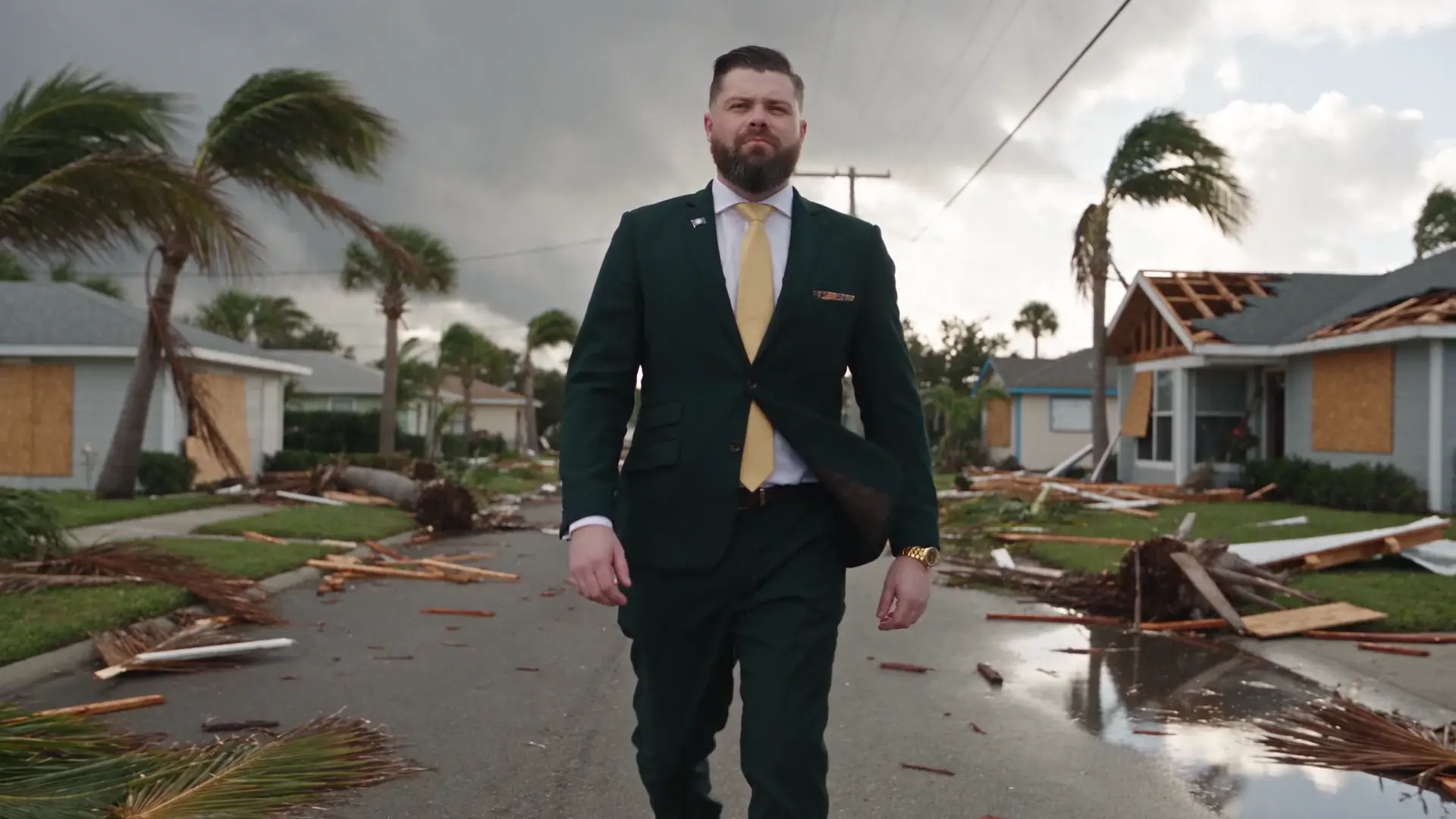
A hurricane damages property in several ways at once: wind, rain, storm surge and falling trees. Each kind of damage can fall under a different part of your policy, or a different policy altogether, and that is where many hurricane insurance claims go wrong.
Denham Law's hurricane damage attorneys represent homeowners, businesses, churches and homeowners and condo associations whose claims have been denied, delayed or underpaid. Our lawyers are licensed in Florida, Texas, Alabama, North Carolina and Kentucky, among other states. Our offices are in Lexington, Kentucky; Nashville, Tennessee; Bozeman, Montana; and Carmel, Indiana. Call (859) 900-BART (2278) or contact us online for a free consultation.

What a Hurricane Insurance Claim Usually Involves
Wind and water are treated differently
Most homeowners and commercial property policies cover hurricane wind damage, subject to the deductible. Rain damage inside is often covered only when the wind first broke open the roof, a wall or a window. Rising water is flood, and most homeowners policies exclude it. See wind damage claims and flood insurance claims.
Storm surge counts as flood
Most homeowners policies treat storm surge as flood, so surge damage is usually paid, if at all, by a separate flood policy from the National Flood Insurance Program (NFIP) or a private insurer. NFIP policies have strict rules, including a signed proof of loss due within 60 days after the flood unless FEMA extends that deadline.
Hurricane and named storm deductibles
In coastal states, many policies carry a separate hurricane, named storm or wind deductible, usually a percentage of the dwelling coverage. It applies only when the storm and timing described in the policy (and in some states, state law) are met, so check that the insurer applied the right one.
Document the damage
- Photograph and video every room, the roof and siding before cleanup.
- Make reasonable temporary repairs, such as tarping the roof, and keep every receipt.
- If water came in, photograph the high-water line with a tape measure in the shot.
- Log every call and inspection, and ask for the adjuster's estimate in writing.
How Insurers Push Back on Hurricane Claims
- Blaming flood. The insurer says rising water, not wind, did the damage. Wind and water leave different marks, and a careful inspection can often tell them apart.
- Calling it wear and tear. Missing shingles and leaks get written off as age or old damage. See roof damage claims.
- Low estimates. Missed areas, below-market pricing and too much depreciation. See underpaid insurance claims.
- The wrong deductible. A hurricane deductible applied to a loss outside the policy's definition.
- Combined-cause wording. Some policies say that when wind and flood act together, the flood exclusion takes the whole loss. How that applies depends on the policy, the facts and the state.
Appraisal
Many policies have an appraisal clause: each side picks an appraiser, and an umpire settles what the two cannot agree on. Appraisal usually decides only what the damage is worth, not whether the policy covers it, so talk with a lawyer before you demand it or agree to it.
When to Call a Hurricane Damage Lawyer
- Your claim was denied, in whole or in part.
- The payment will not cover the repairs your contractor priced.
- The insurer wants a recorded statement, an examination under oath or appraisal.
- Months have passed without a decision, or a deadline is close.
Hurricane Insurance Claims by State
Florida hurricane damage claims
Bart Denham and Meredith Truen are licensed in Florida.
- Reporting deadlines. By law, a new or reopened claim is barred if it is not reported within one year after the date of loss, and a supplemental claim within 18 months. For a hurricane, the date of loss is the date of landfall. Policies also usually require prompt notice, so report damage right away.
- Hurricane deductible. On home, condo and other residential policies, the hurricane deductible applies from the time a hurricane warning is issued for any part of Florida until 72 hours after the last hurricane watch or warning ends. On a policy for your own home or condo unit, once your hurricane losses in a calendar year use up the full hurricane deductible, later hurricane losses that year with the same insurer or insurance group use your regular deductible. Business and church policies follow their own wording.
- Time to decide. On residential claims, and on claims for commercial buildings of 10,000 square feet or less, the insurer generally must pay or deny within 60 days after notice of the claim. After a declared state of emergency, the state can allow up to 30 more days.
See our Florida property damage page and the profiles of Bart Denham and Meredith Truen.
Texas hurricane damage claims
Chad Robinson is licensed in Texas.
- Coastal wind coverage. In 14 coastal counties and parts of Harris County, many homeowners policies exclude wind and hail, and that coverage often comes from the Texas Windstorm Insurance Association (TWIA), the state's wind insurer of last resort. TWIA covers wind and hail only, not flood or storm surge.
- TWIA deadline. A TWIA claim must be reported within one year of the date the damage occurred. The Texas Department of Insurance can allow up to 180 more days for good cause, and TWIA disputes follow their own process and deadlines.
- Time to decide. Under most other policies, once the insurer has what it asked for, it generally has 15 business days to accept or reject the claim in writing, and can take up to 45 more days if it explains why. After a major hurricane, the state can give insurers 15 more days on these deadlines in the counties hit.
See our Texas insurance claim lawyers page and Chad Robinson's profile.
Alabama hurricane damage claims
Denham Law does not have an office in Alabama. Dalton Rawls is licensed in Alabama. Bart Denham, Meredith Truen, Chad Robinson and Jacob Busey, who are also named on this page, are not licensed to practice law in Alabama.
Hurricane Sally came ashore near Gulf Shores in 2020 with hurricane-force winds, storm surge and major river flooding.
- Hurricane or named storm deductible. Some policies apply their percentage deductible only when a storm has been declared a hurricane. Others apply it to any named storm, including a tropical storm, and a named storm deductible can apply more than once in a policy period.
- Separate wind policies. In coastal parts of Mobile and Baldwin counties, some owners carry wind and hail coverage through the Alabama Insurance Underwriting Association, which can mean two claims for one storm.
See our Alabama property damage page and Dalton Rawls's profile.
North Carolina hurricane damage claims
Jacob Busey is licensed in North Carolina. Claims here range from wind and surge on the coast, from Wilmington to the Outer Banks, to the flooding Hurricane Helene caused in the mountains.
- Named storm deductibles. The state Department of Insurance explains that this deductible generally applies from the time a named storm advisory, watch or warning is issued until 24 hours after the last one ends. Named storms include tropical storms and tropical depressions, not just hurricanes.
- Coastal wind policies. In beach and coastal areas, wind and hail may be excluded from the homeowners policy and written by the Coastal Property Insurance Pool, which can mean two claims for one storm.
See our North Carolina property damage page and Jacob Busey's profile.
Does Kentucky get hurricanes?
Not directly. Kentucky is landlocked, so a hurricane never makes landfall here, and storms weaken as they move over land. But the remnants of Gulf and Atlantic hurricanes do reach Kentucky during hurricane season, June 1 to November 30, and they can still bring strong winds and flooding.
How hurricanes affect inland Kentucky:
- Heavy rain and flash flooding, especially along creeks and in eastern Kentucky's hollows.
- Strong wind gusts that tear off shingles and bring trees down on houses and barns.
- Tornadoes spun up by the storm's remnants.
- Long power outages, which can mean spoiled food and sump pumps that stop running.
In September 2008, the remnants of Hurricane Ike tore down thousands of power lines and caused Louisville's largest blackout in at least 30 years. In June 2017, the remnants of Tropical Storm Cindy caused flash flooding in eastern Kentucky and produced tornadoes in central Kentucky. In September 2024, Helene's remnants brought gusts over 60 mph around Lexington, dropped trees onto homes and blew a church steeple off in Jessamine County.
In Kentucky, a hurricane claim is usually a wind damage claim, a tree damage claim or a flood claim. Wind and tree damage is usually covered by homeowners insurance; flood usually is not. Our Kentucky office is at 250 W Main St, Ste. 2650, Lexington. See our Kentucky property damage page.
Hurricane Helene Property Damage Claims
Helene came ashore in Florida's Big Bend as a Category 4 hurricane in September 2024, then brought catastrophic flooding, damaging wind and tornadoes across the Southeast, including western North Carolina, East Tennessee and Kentucky. We help with Helene claims in Florida, North Carolina, Tennessee and Kentucky, where our lawyers are licensed. Some Helene deadlines have already passed, so if your claim is still denied, underpaid or unresolved, have it reviewed now.
How Denham Law Helps With Hurricane Claims
We read your policy and any denial letter, can bring in engineers, contractors and appraisers to document the damage, and deal with the insurer for you. When a claim cannot be resolved, we can take it through appraisal or, when it makes sense, file suit, including a bad faith claim where the law allows one. We also handle commercial property claims and other storm damage claims.
If a hurricane damaged your property and your insurer has denied, delayed or underpaid the claim, call (859) 900-BART (2278) or contact us online for a free consultation.