
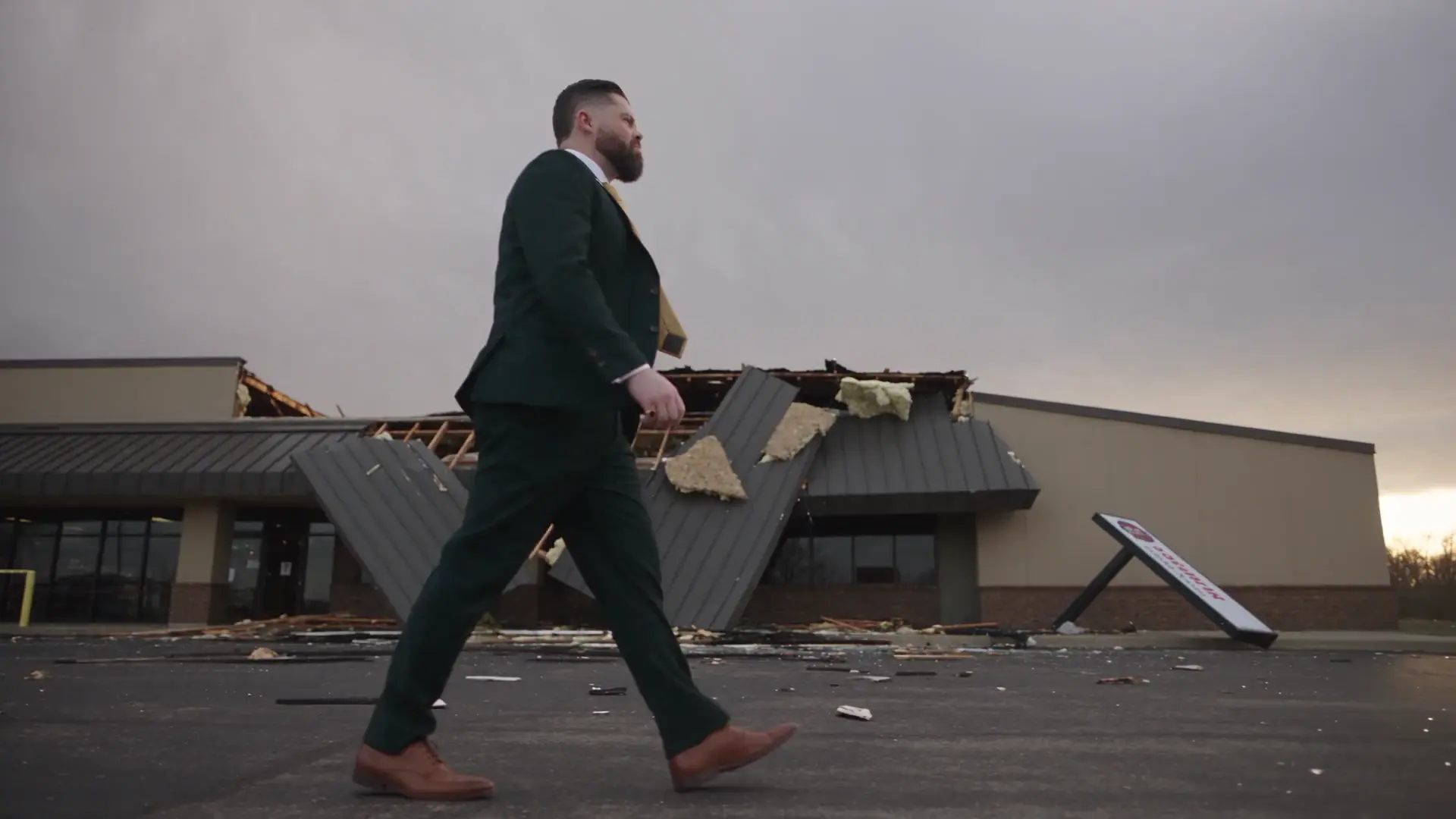
The storm took your roof, your siding, and part of the ceiling underneath. Your insurance company looked at the same property and sent an offer that will not cover the repairs. A storm damage lawyer exists for exactly that gap.
Denham Property & Injury Law Firm represents homeowners and business owners whose property claims were denied, delayed, or paid at a fraction of the loss. First-party property insurance claims are a central part of our practice, not a sideline. Our founder, J. Bart Denham, Esq., built the firm on the policyholder’s side of the table and has stayed there.
If your carrier has gone quiet, or the number on the estimate does not match the damage in front of you, call (859) 900-BART (2278) or reach us online for a free claim review.
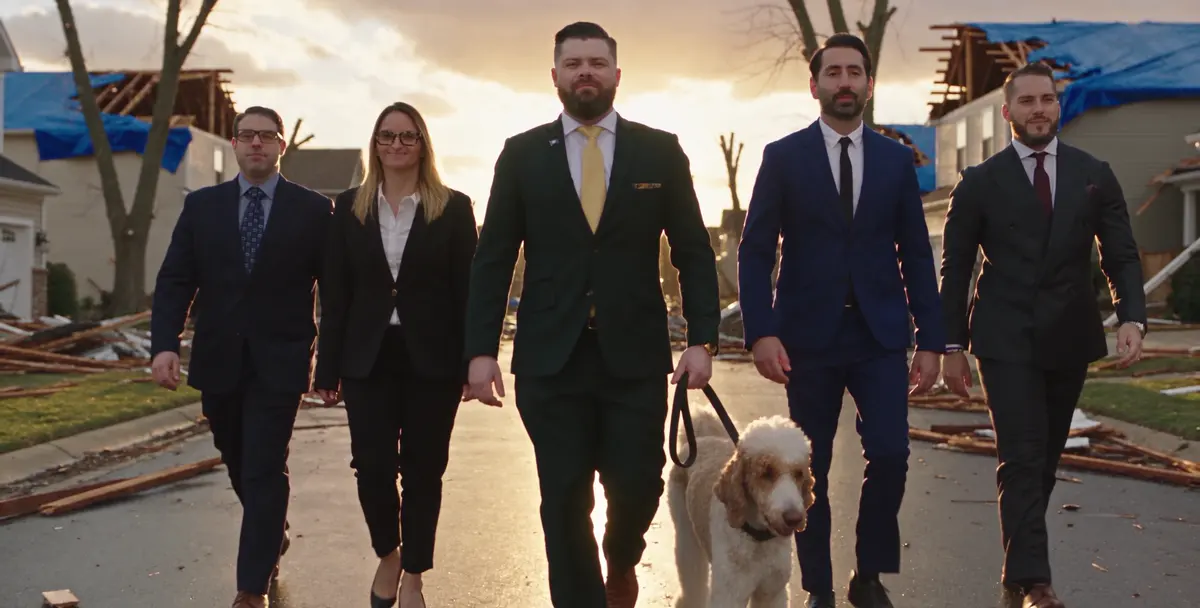
What Does a Storm Damage Lawyer Do After Your Claim Is Denied?
A storm damage lawyer takes over the fight with your insurance company after a denial, a lowball offer, or months of silence. The work means reading the policy line by line, building independent proof of what the storm did, and pushing the carrier toward what it actually promised to pay.
Most people reach out to us after they have already tried on their own. They sent photos, took the calls, and were told the damage was old, cosmetic, or under the deductible. Our storm damage attorneys change that conversation, because the carrier is no longer answering a customer. It is answering someone who can put the file in front of a judge.
Here are some of the ways our team at Denham Property & Injury Law Firm can help with your claim:
- Reading the full policy, including endorsements and exclusions that the adjuster never brought up
- Ordering independent inspections and engineering opinions when the cause of loss is disputed
- Rebuilding the repair scope so it reflects real construction pricing, not estimating software defaults
- Handling the calls, letters, and recorded statement requests from the carrier
- Invoking appraisal, filing suit, or pursuing bad faith when the carrier will not move
After providing a few details about the damage and the day of the storm, we handle the rest of the claims process for you.
Storm Losses We Handle for Homes and Businesses
Property policies commonly cover losses caused by wind, hail, lightning, and other storm-related events, but coverage depends on the policy’s terms, exclusions, and deductibles, particularly when assessing damage after a hailstorm.
The National Weather Service treats a thunderstorm as severe when it produces hail an inch or larger or winds of at least 58 miles per hour. Storms below that threshold still cause real damage, making it important to know the identifying signs of hail damage when evaluating your property after a storm.
We take claims involving:
- Wind damage to roofs and siding, including lifted shingles, torn flashing, and loosened decking
- Hail impact to roofing, gutters, windows, skylights, and HVAC units
- Tornado damage claims, where wind and airborne debris strike the structure together
- Lightning strikes and the electrical and appliance damage that follows
- Trees and limbs down on roofs, vehicles, fences, and outbuildings
- Water that entered after the storm opened the building envelope (the home’s exterior barrier)
- Storm-related roof damage claims where the carrier blames age instead of weather
Business owners face all of that plus lost income while the doors stay closed, which sits in a separate part of the policy that carriers rarely volunteer.
Why Do Insurance Companies Underpay Storm Damage Claims?

Insurance companies underpay storm claims by disputing the cause of the damage rather than refusing coverage outright. Instead, the adjuster calls the damage wear and tear, cosmetic, or pre-existing. You end up paying for the repair, and the carrier never has to say no.
The Wear and Tear Argument
Carriers blame age whenever a storm damages an older roof. Property policies cover sudden accidental loss and exclude gradual deterioration, so the adjuster’s report becomes the whole case. Independent inspection and dated weather records generally rebut it.
Cosmetic Damage Endorsements
A cosmetic damage endorsement lets a carrier pay nothing for hail dents that have not yet caused a leak. Many policyholders do not know the endorsement is on the policy until the denial letter arrives citing it, which is why it is important to understand your coverage before you file a hail damage claim with insurance.
Separate Wind and Hail Deductibles
Many policies apply a wind or hail deductible calculated as a percentage of the dwelling limit, typically 1% to 5%, rather than a flat dollar amount. On a larger home or building, that quietly moves thousands of dollars of the loss onto you.
Depreciation That Never Comes Back
Most first checks are issued at actual cash value, with depreciation held back until repairs are finished and documented. Carriers set deadlines for claiming the rest, and a great many policyholders never see that money released.
| Actual cash value (ACV) | Replacement cost value (RCV) | |
|---|---|---|
| What it pays | Repair cost minus depreciation for age and wear | Full cost to replace with comparable materials |
| When you see it | Usually the first check | The held-back amount, after repairs are completed and proven |
| Common problem | Depreciation applied far too aggressively | The deadline to claim it passes quietly |
The insurance company’s justifications are arguable, and each one is easier to argue before the file is closed than after.
Has your claim already been denied or closed? Call (859) 900-BART (2278). One conversation is usually enough to tell you whether the carrier’s reason holds up.
How We Prove the Storm Caused the Damage
Proving cause of loss is the entire fight in most storm claims. We pull the weather record for your address on the date of loss. We pair it with our own inspection of the property, then present both to the carrier in writing.
The National Oceanic and Atmospheric Administration (NOAA) maintains a searchable record of hail, wind, tornado, and lightning events by county and date going back decades. When an adjuster claims no storm hit your area, that record frequently says otherwise. We also bring in roofing consultants and engineers who inspect the property in person rather than reading it off satellite imagery.
A severe weather claim attorney can gather this proof while the claim is still open. Once the carrier closes the file, you are arguing without it.
What Is Your Storm Damage Claim Actually Worth?
The value of a storm damage claim depends on the policy’s coverage, limits, deductibles, valuation method, and the extent of the covered damage.
Depending on the policy, recovery may include:
- Repair or replacement of the roof, siding, windows, and interior finishes
- Contents damaged by wind, water intrusion, or flying debris
- Additional living expenses while the home is unlivable
- Business income and extra expenses for commercial policyholders
- Code upgrade coverage when repairs have to meet current building requirements
- Matching, so replacement materials do not leave a roof or a wall two-toned
Whether these losses are covered, and how much the insurer must pay, depends on the policy and applicable law.
Storm Damage or Flood Damage: Which Policy Pays?

Rain that enters through a wind-damaged roof is generally a homeowners or commercial property claim involving insurance coverage for water damage. Rising surface water that comes in at ground level is a flood claim, and standard property policies exclude it.
Flood coverage comes through the federally managed National Flood Insurance Program (NFIP) or a private flood policy. When a single storm causes both, carriers have a clear financial reason to push as much of the loss as possible into the flood column.
| What happened | Typically paid by | Where the dispute starts |
|---|---|---|
| Rain through a wind-torn roof | Homeowners or commercial property policy | Carrier calls the opening pre-existing |
| Storm surge or rising water | Flood policy | Interior damage assigned to flood |
| Sewer or drain backup during a storm | Endorsement, if one was purchased | No endorsement on the policy |
| Tree through a wall or roof | Homeowners or commercial property policy | Debris removal limits |
Sorting the loss correctly at the start protects the part of the claim that is genuinely covered.
Why Policyholders Bring Us Their Storm Claims
We do not divide our attention between car wrecks and property claims. J. Bart Denham, Esq. learned property loss litigation with a boutique firm in the Tampa Bay area, one of the most contested insurance markets in the country, before founding this firm in his hometown of Lexington. He is a member of the Kentucky Justice Association and the Florida Justice Association.
Our clients often see the situation change dramatically when they stop navigating the insurance process on their own and bring in professional representation.
“While the insurance attempted to stall any progress at every turn, Bart had the kind of dogged determination and technical knowledge that resulted in a settlement in our favor.”, Theresa M.
“I battled with insurance for nearly a year before engaging Bart, and he was able to receive a settlement in a short amount of time.”, John T.
We work from offices in several U.S. cities, and we handle storm claims for policyholders well beyond our office locations. Let our storm damage insurance claim lawyers look at your claim. It costs nothing to see if we can help you.
Storm Damage Insurance Claim Questions, Answered by Our Attorneys
Can I still hire a lawyer if I already cashed my insurance company’s check?
Yes, you can generally still hire a lawyer after cashing a storm claim check, because most payments are partial rather than final. What matters is whether you signed a release. If you did, options narrow, though supplemental claims and newly discovered damage may remain open.
How long do I have to file a storm damage insurance claim?
Deadlines vary by policy and state. Policies typically require prompt notice and may contain a deadline for filing suit, while state law can affect how that deadline applies.
Can my insurance company cancel my policy for hiring a lawyer?
Hiring a lawyer does not itself determine whether your policy can be canceled or nonrenewed. Cancellation and nonrenewal rules vary by state, so the permitted reasons and procedures depend on state law and the terms of the policy.
Is appraisal faster than suing my insurance company?
Appraisal is usually faster than a lawsuit, and many property policies include appraisal. Appraisal resolves disagreements about the amount of loss, not about whether the loss is covered at all. When the carrier disputes coverage itself, appraisal will not settle the question.
Do I need a public adjuster or a storm damage attorney?
It depends on what the carrier is disputing. A public adjuster can help value and present a property claim. A lawyer can address coverage disputes, litigate when necessary, and pursue bad-faith remedies where available under applicable law.
Will filing a storm damage claim raise my premium?
Possibly, though weather losses are treated differently from at-fault claims, and widespread storm events often affect rates across an entire region regardless of who filed. Declining to claim a covered loss rarely protects a policyholder from that.
Do I have to pay anything up front to have my storm claim reviewed?
No, reviewing your storm claim costs nothing. We will look at the policy, the adjuster’s estimate, and the denial letter, if there is one, and then tell you whether the carrier’s position is defensible.
Talk to a Storm Damage Insurance Claim Lawyer Before the Carrier Closes Your File

Waiting to seek legal help with an insurance claim helps the carrier, not you. Insurers count on files going quiet, and claims that go quiet tend to close without a resolution for the policyholder.
Call Denham Property & Injury Law Firm at (859) 900-BART (2278), or set up a free consultation online. Our main office is at 250 W Main St., Ste. 2650, Lexington, KY 40507, and we represent storm damage policyholders across the country.