
What Should You Do When Your Property Damage Claim Stalls?
When your property damage claim stalls, start putting your follow-ups to the adjuster in writing and save every letter and email the insurance company sends you. Those dated records show exactly how long your claim has been sitting.
What to do about an insurance claim delay after that depends on the deadlines your state sets for insurance companies. Once the carrier misses one, a property insurance attorney can step in and push for payment.
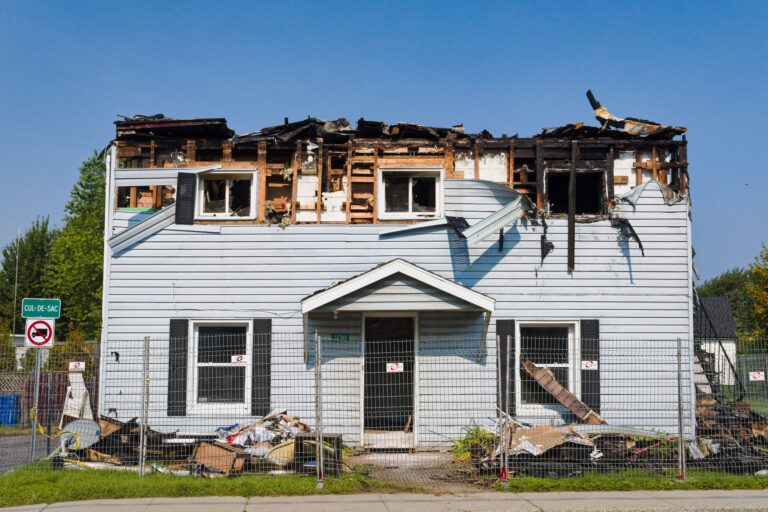
Three weeks after the fire, the storm, or the burst pipe, the adjuster has gone quiet. Your contractor wants an answer, and your family is living in a damaged house, hotel room, or rental property. In that situation, the most pressing question that emerges is: how long does an insurance company have to pay a claim like yours?
Your state’s insurance code sets that deadline, not the adjuster assigned to your file. State laws often set deadlines for acknowledging, investigating, and paying insurance claims, though the deadlines and the events that trigger them vary by state.
When a carrier blows past those windows without a valid reason, a delayed insurance claim attorney can step in to enforce legal deadlines and hold the insurer accountable.
Key Takeaways for Property Damage Claim Payment Deadlines
- State insurance codes, not insurance company policy, set the deadlines for acknowledging, deciding, and paying a property damage claim.
- Most property claims hinge on three things: acknowledgment of the claim, a coverage decision after proof of loss, and payment after the carrier accepts.
- A request for a sworn proof of loss, an examination under oath, a recorded statement, or documents can affect how long a claim takes.
- Adjuster turnover, a file sitting “in review,” and a pending supervisor approval are not legal reasons for an insurer to miss a payment deadline.
- Some states attach a financial penalty to a late payment, such as interest on the settlement or the policyholder’s attorney’s fees.
What Deadlines Apply to a Property Damage Claim?
State laws often set deadlines for acknowledging, investigating, and paying insurance claims, though the deadlines and the events that trigger them vary by state. Three moments in a claim usually matter most, and carriers stall at the second one more often than the other two.
| The carrier’s obligation | What starts the clock | Why it matters to you |
|---|---|---|
| Acknowledge the claim | The date you report the loss | Confirms the claim exists and gives you a dated starting point |
| Accept or deny coverage | The date the carrier receives your proof of loss | This is where most claims stall without explanation |
| Pay the accepted amount | The date the carrier affirms liability | Acceptance without payment is still a delay |
Most states have some version of a prompt payment of claims statute backing those deadlines, though the timeframes differ from state to state.
The National Association of Insurance Commissioners (NAIC) tracks those differences in its model law chart on claims settlement provisions, and the spread is wide. What your friend or family member in another state experienced tells you very little about your own deadline.
How Long Can an Insurer Investigate a Claim?

An insurer does not get unlimited time to investigate your claim. Once the carrier has your proof of loss, state rules generally require a coverage decision within a set number of days. If the investigation is still open, the carrier usually has to tell you in writing why it needs more time.
A long investigation is not automatically a problem. A long investigation that the carrier never explained is a problem, because the explanation is part of what the rules require.
What an Investigation Timeline Usually Looks Like
Most states build the investigation window around three points: a short deadline to acknowledge your claim, a longer one to accept or deny it after proof of loss, and a requirement that the insurer explain in writing when it needs more time. The exact timeframes are determined by your state’s insurance rules.
In Kentucky, for example, the property and casualty claims settlement rule gives an insurer 15 business days to acknowledge a claim and 30 calendar days after proof of loss to offer any payment due. If the carrier needs longer to decide, it must provide written notice within those 30 days. Written updates are provided every 45 days while the investigation remains open.
Your state may run shorter or longer periods and may start the clock on a different event.
What Can Affect the Timeline of Your Claim?
An insurance company may need information from you before it can finish investigating or paying your claim. Depending on your policy and your state’s rules, a request for a sworn proof of loss, documents, a recorded statement, or an examination under oath can affect how long the claim takes.
| Requests that can affect the timeline | What the carrier is asking for |
|---|---|
| Sworn proof of loss | A signed, formal statement of your loss and its value |
| Examination under oath | Sworn questioning about the loss, usually with a lawyer present |
| Recorded statement | A recorded account of how the damage happened |
| Document requests | Receipts, repair estimates, photos, or ownership records |
While insurers have a legitimate right to request documents, statements, or examinations, some use a stalling tactic by requesting them one at a time over several months instead of all at once. This drip-feed approach keeps the investigation perpetually open, preventing the claim from reaching the stage where the insurer must make a final decision or payment.
Excuses That Do Not Stop the Payment Clock
An insurance company’s internal problems do not extend the deadline your state gives it. If your insurance company is taking too long to pay your claim and the reason you keep hearing is about the carrier’s own staffing or process, that reason carries no legal weight.
These explanations do not pause anything:
- Your file was reassigned to a new adjuster
- The claim is “in review” with no stated end date
- The adjuster is waiting on a supervisor or a manager’s sign-off
- The carrier is waiting on its own engineer or vendor without telling you why
- You get no explanation at all
None of that shifts the burden onto you. The deadline belongs to the carrier, and a reassignment or an internal backlog does not reset it or buy the company more time.
How a Paper Trail Proves Your Claim Was Delayed
Proving an insurance claim delay relies on concrete dates, not just feelings of frustration. Phone calls when an adjuster promises to look into it leave no trace, which is why carriers so often have no record of the six weeks you spent waiting.
You can build a strong paper trail to document the delay by taking two key steps. The first is following up in writing, so every request you make has a date attached to it. The second is keeping everything the carrier sends you, including letters, emails, estimates, and voicemail notifications.
An experienced insurance claim lawyer can handle the rest. They can request the claim file, review the adjuster’s internal notes, and line up the carrier’s conduct against the deadlines the state imposes. Comparing our carrier’s records to state regulations shows whether your carrier missed a deadline it was required to meet.
When Does a Delayed Claim Become Bad Faith?
An unreasonable delay can sometimes support a bad faith claim, though a slow claim is not automatically bad faith. What you have to prove depends on your state’s rules and on the facts of your claim. Under many state insurance codes, unreasonable delay can be bad faith when the carrier has no reasonable basis for leaving the claim unpaid.
Most states list the conduct that crosses the line, and the lists look similar: failing to act promptly on claim communications, refusing to pay without a reasonable investigation, and failing to affirm or deny coverage after proof of loss. Some states also impose fees for late payments, particularly when disputes involve insurance coverage for fire damage.
Kentucky is one example. Its unfair claims settlement practices statute covers that same conduct, and a separate statute on the time of payment adds 12% annual interest when an insurer fails to make a good faith attempt to settle within 30 days of notice and proof of claim. Policyholders may also recover reasonable attorneys’ fees if the delay had no reasonable foundation.
Courts in that state require proof that coverage was owed, that the carrier had no reasonable basis for refusing to pay, and that it either knew that or ignored it. Other states set the bar differently, which is why the same delay can support a claim in one place and not another.
Property insurance attorneys apply formal investigation techniques and thorough documentation to challenge wrongful decisions, even if the carrier denies the claim instead of continuing to stall.
When a denial arrives after months of silence, examining the insurer’s records and written communications helps establish whether the company failed to conduct a proper investigation before issuing the denial.
What Do Insurance Claim Attorneys Do When a Carrier Stops Answering?
Property damage attorneys represent policyholders, not insurance companies, when handling stalled, delayed, or underpaid claims. When an insurer stops responding, legal representation helps protect policyholders’ rights and ensures claims are properly evaluated, including claims involving cleaning and restoring fire-damaged property.
When a claim stalls, attorneys take over communication with the adjuster, put the carrier’s legal obligations in writing, and document every day the file sits without a decision. Insurance carriers tend to respond faster once an attorney gets involved and gives your claim legal leverage by making formal written requests.
More Questions About Claim Payment Deadlines, Answered by Our Property Insurance Attorneys
How long does an insurance company have to pay a claim after it accepts coverage?
Generally, an insurance company must pay within a set number of days after it accepts coverage, often 30 days in states that address it directly. Acceptance alone does not satisfy the carrier’s obligation. A written acceptance followed by weeks of no payment is still a delay you can act on.
Does a supplemental claim for damage found later start a new clock?
Sometimes, yes, a supplemental claim may start a new review period for damage discovered later. The deadlines that apply depend on your state’s rules, your policy, and what additional information the insurer needs to evaluate the new damage. Hidden water behind a wall or smoke damage found during repairs is new information the carrier has to consider, particularly when determining insurance coverage for water damage.
Can the carrier delay payment because my mortgage company is on the check?
No, a mortgage company’s involvement does not excuse a late payment, though it can slow how fast the money reaches your contractor. Carriers frequently name the lender as a payee on property damage checks. Issuing that check on time remains the carrier’s obligation.
Does invoking the appraisal clause in my policy pause the payment deadline?
Appraisal does not automatically pause a payment deadline. It can affect the timing of a dispute over the amount of your loss, but whether it changes a statutory deadline depends on your state’s rules and your policy. Appraisal settles disagreements about the value of a loss, not about whether coverage exists.
Is there a deadline for paying additional living expenses while I wait?
Yes, additional living expenses are usually payable as they are incurred rather than at the end of the claim. If your policy covers a hotel or a rental while your home is unlivable, a carrier generally cannot hold those payments until it finishes evaluating the structure.
Will hiring an attorney slow my claim down?
No, hiring an attorney does not typically slow a property damage insurance claim, and carriers often move faster once counsel is involved. A represented claim comes with dated written demands and a documented record, which changes how an adjuster handles the file.
Talk to Our Attorneys About a Delayed Property Damage Claim

Waiting on an insurance company while your roof stays tarped or your business stays closed is exhausting, and every week of delay costs you money. You do not have to keep calling an adjuster who will not return your calls.
Our insurance claim lawyers at Denham Property & Injury Law Firm review delayed property damage claims at no charge and can tell you whether your insurance company has already missed a deadline it has to answer for.
Call (859) 900-2278 or contact our firm online to talk through where your claim actually stands. Our headquarters is at 250 W Main St., Ste. 2650, Lexington, KY 40507. We work with homeowners and business owners nationally from offices in Lexington, Nashville, Carmel, and Bozeman.