What Does an Insurance Company Look at First in a Water Damage Claim?
An insurance adjuster reviewing a water damage claim usually starts by answering two questions: where the water came from and how long it was there. The source of the water damage helps determine which coverage or exclusion may apply.
A broken supply line, a backed-up drain, and water rising from outside are treated differently. How long the water was present also helps show whether the damage came from a sudden event or developed over time.
Water damage can be one of the trickiest losses to claim under a homeowners policy. Two homes can have the same soaked hardwood floor but very different coverage results. Insurance coverage for water damage depends on the cause rather than on the result.
That is why two neighbors with identical policies and similarly damaged properties can receive different coverage decisions. One had a supply line burst upstairs. The other had a storm drain back up into the basement. Damage from the burst supply line is often covered, while drain backup may require added coverage.
If questions come up about whether your loss should be covered, our water damage insurance claim lawyers can help you understand the policy language and the insurer’s reasoning.
Key Takeaways for Water Damage Coverage
- Standard homeowners policies cover sudden and accidental water damage and exclude damage that develops gradually.
- Flood damage from surface water is excluded from standard homeowners policies and requires separate flood coverage.
- Standard homeowners policies exclude sewer and drain backup unless water backup coverage was added by endorsement.
- Mold coverage is policy-specific. Some policies exclude it, while others cover it subject to a separate dollar limit.
- Coverage turns primarily on where the water came from, not how much damage it caused.
Is Water Damage Covered by Homeowners Insurance?
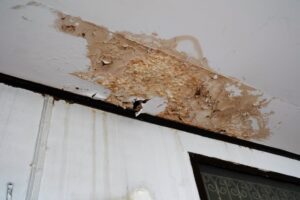
A standard homeowners policy covers sudden and accidental water damage from plumbing or a household appliance. Coverage changes when a policy exclusion or condition applies.
Slow seepage, water entering from outside at ground level, and sewer or drain backup are treated differently. These losses can fall under specific exclusions or require additional coverage.
What Water Damage Is Covered by Insurance, Cause by Cause
It is easier to understand coverage when you look at the cause of the water damage. The chart below shows the general coverage rule under a standard homeowners policy. Your policy's exact wording controls the final coverage decision.
| Cause of loss | Typical coverage | Why |
|---|---|---|
| A pipe bursts suddenly | Covered | Sudden and accidental discharge |
| The washing machine or dishwasher overflows | Covered | Sudden and accidental discharge |
| The water heater fails and floods | Covered, except the heater itself | Water damage may be covered; the failed heater may not be |
| Roof leak after storm damage | Covered when the storm creates the opening | Wind or hail must damage the roof first |
| Roof leak from an aging roof | Excluded | Wear and tear or lack of maintenance |
| Sewer or drain backs up | Excluded without an endorsement | Water backup exclusion |
| Surface water or rising water | Excluded | Flood exclusion |
| Groundwater seeps through a foundation | Excluded | Water below the surface of the ground |
| Air conditioner condensation over time | Excluded when caused by ongoing seepage | Continuous or repeated seepage |
A common pattern is that sudden water damage from inside the home is more likely to be covered, while slow leaks and water from outside are more likely to be excluded. Harder cases involve more than one cause, such as an aging roof that is then damaged by a storm, making assessing wind damage to roofs and siding important when determining what caused the covered loss.
Three Water Damage Insurance Exclusions That Often Lead to Denials
Three water damage insurance exclusions commonly lead to claim denials. Each one has a specific definition, and whether it applies depends on the policy language and the facts of the loss, making filing a water damage claim an important step that requires careful attention to the applicable exclusions.
Gradual Damage and Repeated Seepage
Most homeowners policies exclude damage from slow leaks that continue or happen repeatedly over weeks or months. Policies often call this continuous or repeated seepage. Damage that develops over time is treated differently from damage caused by one sudden event and can fall under a continuous or repeated seepage exclusion.
The condition of the damaged materials can help indicate how long the leak has been ongoing. Layers of staining, rusted fittings, or a deteriorated subfloor are signs that a leak developed over time. A clean break and freshly wet materials point toward a sudden failure.
Flood and Surface Water
Standard homeowners policies exclude flood damage, including water that rises or accumulates outside the home and then enters the property. Because most homeowners insurance does not cover flood damage, homeowners typically need separate flood coverage through the National Flood Insurance Program or a private insurer to protect against losses caused by rising water, storm runoff, and similar flooding.
In general, the flood exclusion applies to water that comes from outside and reaches the home at ground level, such as storm runoff, overwhelmed drainage, or rising water from a nearby waterway. Water that starts inside the home is usually handled under different policy terms.
Sewer and Drain Backup
A standard homeowners policy excludes sewer, drain, or sump-pump backup unless that coverage is added by endorsement. This can surprise homeowners because the water may enter through plumbing inside the home, even though the policy treats backup separately.
The policy language and the cause of the backup determine whether the exclusion applies.
Endorsements That Can Expand Water Damage Coverage
An endorsement is an add-on that changes the base policy. Three common endorsements can expand coverage for certain water losses. Homeowners may already have one or more without realizing it.
- Water backup coverage pays for damage from sewer, drain, and sump pump backup, usually with its own limit between $5,000 and $25,000
- Service line coverage can help pay to repair buried pipes that run from the street to the house and may not be covered by the base policy
- Hidden water damage coverage may cover damage from certain leaks inside walls or under floors when the problem was not reasonably detectable
The declarations page shows which endorsements were added to the policy. Checking it can help you see whether extra coverage applies to the loss.
How Mold Sublimits Can Limit What Insurance Pays
When a policy covers mold, that coverage may have a separate dollar limit, often called a sublimit, within the overall policy limit. The amount varies by policy and may be less than the full cost of containing, removing, and repairing mold damage.
How quickly the area dries can affect whether mold develops. The Environmental Protection Agency (EPA) advises drying wet materials within 24 to 48 hours because mold usually does not grow when materials are dried within that time.
Mold coverage depends on what caused the mold. Mold following a sudden covered loss is analyzed differently from mold caused by a long-term leak that went unrepaired.
What the Insurance Company Asks For, and Why
Insurers often ask for the same three types of records. Each helps answer a different question about what caused the damage, how long it lasted, or how much repair is needed.
- A sworn proof of loss is a formal statement that lists what was damaged and the amount being claimed. Some policies or state laws tie claim deadlines to when it is submitted
- A plumber's or restoration report helps show what caused the leak and whether it happened suddenly or developed over time
- Moisture readings and drying logs show how wet the materials were and how quickly they dried, which can affect repairs and mold issues
These records also support the homeowner's claim. For example, a plumber's written opinion that a fitting failed suddenly provides more objective evidence than the homeowner's description alone.
When to Get Help With a Water Damage Claim
You may need legal help once the insurer puts its coverage decision in writing, especially if it denies the claim or relies on an exclusion. Disputes over repair costs can sometimes be resolved with estimates and contractor input. Coverage disputes may require a closer review of the policy and the facts.
State insurance laws establish requirements for investigating claims and explaining coverage decisions. The deadlines and procedures differ by state. The National Association of Insurance Commissioners (NAIC) tracks how claim handling standards differ from state to state, including deadlines for acknowledging claims and making coverage decisions after a proof of loss is submitted.
A written denial that identifies a specific exclusion gives a property damage insurance claim attorney a starting point for deciding whether that exclusion actually applies to your loss and how it affects your property damage insurance claims.
Common Questions About Water Damage Coverage
Does my deductible apply separately to each part of a water damage claim?
For a single covered loss under one homeowners policy, one deductible normally applies to both the home and belongings. A separate deductible may apply when more than one policy provides coverage, such as a homeowners policy and a flood policy. A water backup endorsement may also have its own deductible.
Will insurance pay to fix the appliance that caused the water damage?
Not under the standard coverage for the water loss. A homeowners policy covers the resulting water damage rather than the failed appliance or pipe itself. For example, if a washing machine floods the laundry room, the policy may cover the damaged floor but not the washing machine. Some service line or equipment breakdown endorsements can change that result.
Does homeowners insurance cover water damage in a finished basement?
Yes, when the water comes from a covered source such as a sudden burst pipe. In basements, however, water may also come from sources that are often excluded, such as groundwater seepage or drain backup. Some policies also limit coverage for finishes below ground level.
Am I covered if a neighbor's plumbing leaked into my home?
Yes, when the loss falls within your own policy's water-damage coverage, you can make a claim with your own insurer. Your insurer may then seek repayment from your neighbor or the neighbor's insurer. This process is called subrogation.
Does insurance cover water damage while my house is on the market and empty?
Coverage depends on the policy's definition of vacancy and how long the home has been empty. Many policies limit or suspend coverage for certain losses after a home has been vacant for a set period, often 30 or 60 days. A vacancy endorsement may provide added coverage.
Is water damage from firefighting covered under my water damage coverage?
Firefighting water damage is covered as part of the fire loss under a standard homeowners policy. Damage from the fire, smoke, firefighting water, and necessary demolition are handled together as part of the same loss, which is why understanding insurance coverage for fire damage is important. Filing separate claims can create confusion about deductibles.
Can a claim be denied because I have made water claims before?
A prior claim does not by itself justify denying a new one, although claim history can affect renewal and pricing. Insurers track prior losses in industry claim-history databases. Several similar claims at the same property may lead the insurer to look more closely at whether the problem had been ongoing.
Review Your Policy Before Accepting a Coverage Decision

When an insurer denies a water damage claim based on an exclusion, two questions matter most: Which exclusion did the insurer apply, and do the facts actually fit that exclusion? Policy language can be technical, and the same exclusion may not apply to every loss.
At Denham Property & Injury Law Firm, we represent policyholders, not insurance companies. Bart Denham founded the firm to handle denied, delayed, and underpaid property claims. Today, our firm helps homeowners and business owners nationwide from offices in Lexington, Nashville, Carmel, and Bozeman.
Talking with a water damage insurance claim lawyer costs nothing and usually takes one conversation. Call (859) 900-2278 or contact our firm online to have us review your denial and policy together.