
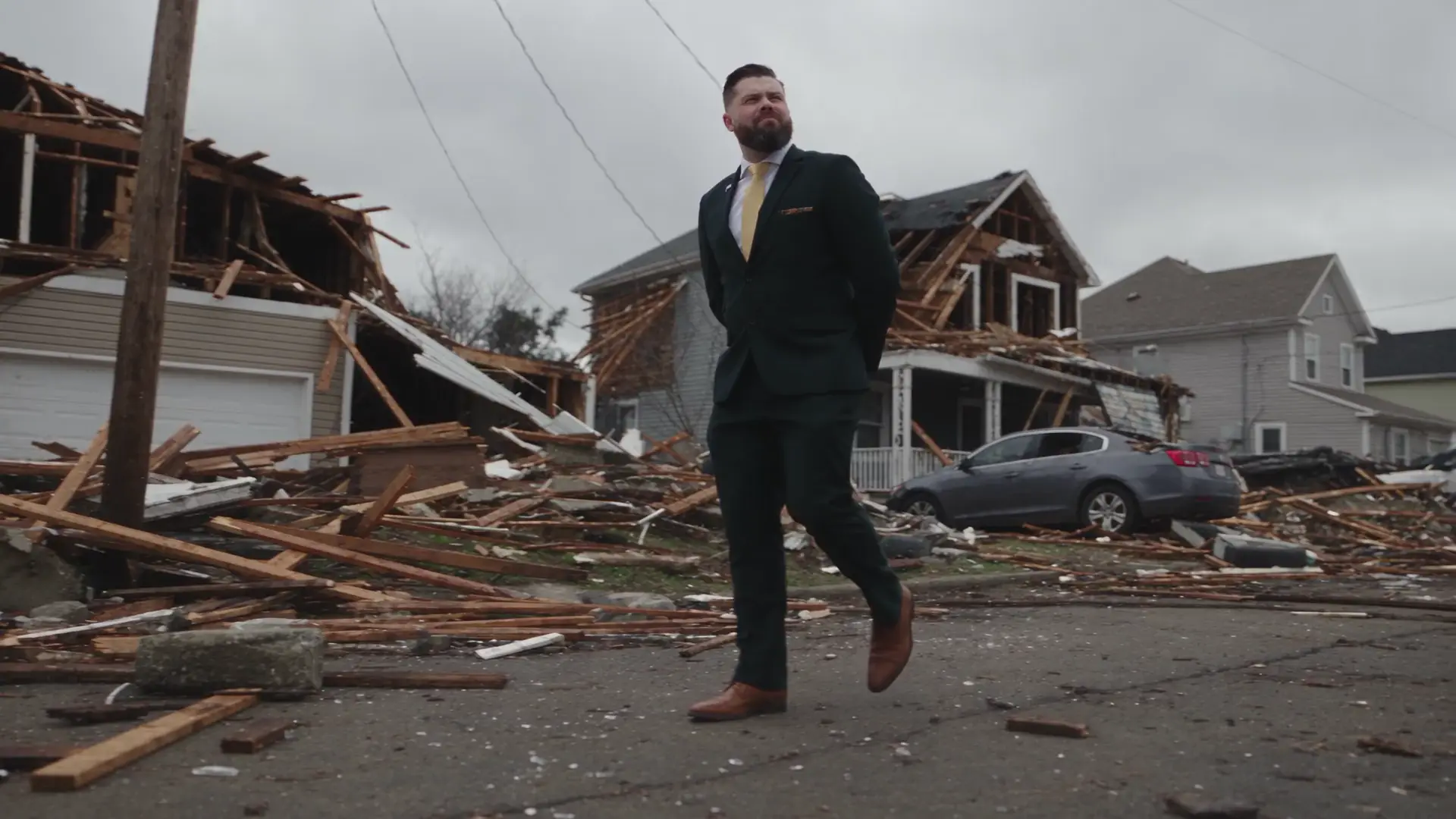
A tornado can damage a Kentucky home or business in minutes, but the insurance dispute can last far longer. Our Kentucky tornado damage lawyers can help when your insurance company delays the claim, disputes the cause of damage, undervalues repairs, or denies coverage that the policy provides.
Denham Property & Injury Law Firm represents policyholders in property insurance disputes across Kentucky. From our Lexington headquarters, we review policies, estimates, engineering opinions, photographs, carrier communications, and other evidence that can show the full scope of a tornado loss.
If your insurer is not paying what your policy requires, call (859) 900-BART / 859-900-2278 or contact us online for a free consultation with our Kentucky insurance claim attorneys.

Does Homeowners Insurance Cover Tornado Damage in Kentucky?
Most homeowners property policies cover direct tornado damage through windstorm coverage, but the policy’s terms, deductibles, exclusions, and valuation provisions still control the claim. Properly documenting wind damage for insurance claims can help establish the extent of covered storm damage. Coverage can become more complicated when wind, rain, debris, and flooding contribute to different parts of the loss.
The Kentucky Department of Insurance’s disaster insurance guidance identifies tornadoes as a type of windstorm loss that most property policies cover. It also distinguishes wind damage from flood damage, which commonly requires separate coverage.
| Tornado-related loss | Common coverage question |
|---|---|
| Roof or siding torn away | Did wind cause direct physical damage, and what repair scope is necessary? |
| Broken windows and rain entry | Did covered wind damage create the opening that allowed water inside? |
| Fallen tree or debris impact | Which structure, removal, and repair provisions apply? |
| Damaged personal property | What valuation method and limits apply to contents? |
| Temporary relocation | Does the policy provide additional living expense coverage? |
| Floodwater after the storm | Is the loss excluded from the property policy or covered separately? |
A tornado damage insurance claim in Kentucky should be evaluated from the policy outward. We do not assume that every form of storm-related damage receives the same coverage.
What Should I Do About Temporary Repairs Before the Adjuster Arrives?

After a tornado, you may need to prevent additional damage before the insurer finishes its inspection. Kentucky insurance guidance recommends protecting the property when it is safe, documenting the loss, saving receipts, and avoiding unnecessarily expensive temporary repairs.
Useful records can include:
- Photos or video taken before tarping, boarding, water removal, or cleanup.
- Receipts and invoices for temporary materials or emergency work.
- Damaged materials or belongings kept for inspection when practical.
- Notes showing the claim number, adjuster contacts, and repair-related conversations.
These records can help if the insurer later disputes what the tornado damaged or how much temporary work should be reimbursed.
What If Tornado Damage Forces Me Out of My Home?
Many homeowners policies include additional living expense, or loss-of-use, coverage when covered damage makes a home uninhabitable. Kentucky guidance explains that this coverage generally pays reasonable increases above normal living expenses, subject to the policy’s dollar and time limits.
Depending on the policy, covered expenses may include:
- A hotel or temporary rental while repairs are underway.
- Reasonable increased meal costs when temporary lodging lacks normal cooking facilities.
- Other necessary living costs above what the household ordinarily spends.
- Receipts and records supporting each added expense.
Disputes can arise over whether the home is habitable, how long benefits should continue, or whether particular costs are reasonable. We can compare those decisions with the policy, repair timeline, and conditions at the property.
Why Do Insurance Companies Dispute Kentucky Tornado Claims?
Tornado losses often affect several parts of a property at once. The carrier may accept one category of damage while disputing another, creating property damage insurance claims that look partially approved but still leave major repair costs unpaid.
Wind Damage Versus Pre-Existing Wear
One common dispute is causation. An insurer may attribute roof, siding, or structural conditions to age, maintenance, installation issues, or deterioration rather than the tornado.
We compare the carrier’s explanation with the timing of the event, documented conditions, repair assessments, weather information, and policy language. The question is not whether a property had any prior wear. It is whether the covered event caused damage that the policy requires the insurer to address.
Repair Scope and Matching
A carrier may agree that several shingles or pieces of siding need replacement but reject a larger repair scope. Kentucky’s property claims settlement regulation addresses qualifying replacement-cost losses when new items do not reasonably match existing materials in quality, color, and size.
That rule can affect roof, siding, and interior repair disputes after a hailstorm. We review the policy and the proposed repair to determine whether the insurer’s scope accounts for Kentucky’s settlement standards.
Wind-Driven Rain and Other Water Damage
A tornado can tear away roofing, break windows, or damage exterior walls before rain enters the building. Whether resulting water damage receives coverage depends on the policy language and the chain of events that caused the loss. Understanding these factors is important when filing a water damage insurance claim, because the cause of the water intrusion can affect whether the resulting damage is covered.
Flooding is different. Surface water or rising water may fall under a flood exclusion and separate flood policy. We address that distinction without allowing the carrier to label every post-storm water loss as flooding.
What Makes Western Kentucky Tornado Claims Different?

Western Kentucky has experienced catastrophic tornado damage, demonstrating how a single storm system can affect homes, businesses, utilities, and entire communities. The National Weather Service documented the December 10-11, 2021 tornado outbreak, including the long-track tornado that devastated Mayfield and traveled more than 165 miles.
That history gives Kentucky policyholders a practical reason to scrutinize storm-specific policy terms such as wind deductibles, replacement-cost provisions, debris removal, additional living expenses, and business interruption coverage.
Large disasters can also create contractor shortages and changing repair costs. Those market conditions do not rewrite the policy, but they can make an early insurer estimate less representative of the actual cost of covered repairs.
How Can Actual Cash Value and Replacement Cost Affect a Tornado Payment?
The valuation method can change both the timing and amount of a tornado claim payment. For residential fire and extended-coverage losses, Kentucky regulations generally define actual cash value as replacement cost at the time of the loss minus depreciation, subject to limited exceptions. Commercial policies may use different valuation language.
We review the declarations, loss-settlement provision, depreciation calculations, and any conditions for recovering withheld depreciation. That helps separate a legitimate policy deduction from an underpayment that leaves covered work unfunded.
What Can a Lawyer Do About an Underpaid or Denied Tornado Claim?
A lawyer can analyze the policy, identify the carrier’s stated reasons for limiting payment, gather claim evidence, and challenge unsupported coverage or valuation positions. The legal work should focus on the actual disputed items rather than simply demanding a larger number.
We may examine:
- The policy, declarations, endorsements, and deductibles.
- The insurer’s estimates and scope of loss.
- Engineering, roofing, contractor, or other technical opinions.
- Photographs and records showing pre-loss and post-loss conditions.
- Depreciation and actual cash value calculations.
- Matching issues for roofing, siding, flooring, or other materials.
- Communications that explain, delay, or change the carrier’s position.
Disputes over how tornado damage claims are handled often involve causation, repair scope, depreciation, matching, and the insurer’s investigation of the loss. Any one of these issues can affect whether the payment is enough to complete covered repairs.
| Carrier position | What we evaluate |
|---|---|
| The roof was already worn | Evidence separating prior wear from new wind damage |
| Only spot repairs are necessary | Repair scope, matching, and replacement-cost terms |
| The water came from flooding | Source of water, sequence of events, and applicable exclusions |
| Our estimate is sufficient | Omitted work, pricing, depreciation, and policy benefits |
| The claim is still under review | Investigation history, requests for information, and Kentucky timing rules |
What Kentucky Insurance Rules Apply to Tornado Claims?
Kentucky insurers must follow state claim-handling standards while investigating and resolving property losses. Those standards do not create coverage where the policy excludes a loss, but they regulate how carriers communicate, investigate, explain decisions, and make payments.
KRS 304.12-230 prohibits specified unfair claim settlement practices. Among other provisions, it addresses failures to conduct a reasonable investigation, certain misrepresentations of policy provisions, and failures to provide a reasonable explanation for denying a claim or offering a compromise settlement.
Kentucky’s claim-handling rules also address payment timing and continued communication while an investigation remains open. A delayed or disputed claim does not automatically amount to bad faith. We look at the carrier’s investigation, explanations, policy interpretation, and conduct as a whole before deciding whether additional legal claims may exist.
If the insurer’s estimate or coverage decision has left major tornado damage unresolved, we can give the claim a focused legal review. Call (859) 900-BART / 859-900-2278 to talk through the carrier’s position and the next available options.
Why Choose Denham Property & Injury Law Firm After Kentucky Tornado Damage?
Our practice centers on policyholder-side insurance disputes, not routine defense work for carriers. J. Bart Denham, Esq., founded the firm after building a legal background that included in-house work, litigation, and property-loss claims. He earned his business degree and law degree from the University of Kentucky.
That experience helps us approach tornado claims as both contract disputes and real property losses. We can examine the insurer’s policy interpretation while also tracking the practical repair, valuation, and business issues that drive the amount in dispute.
Clients have described our team as responsive and persistent when dealing with insurance problems. For Kentucky property owners, that means direct attention to the carrier’s claim position rather than a generic storm-loss checklist.
We also know that tornado damage does not stop at one category. Related wind damage claims in Kentucky may involve the same roof, siding, structural, and valuation questions. If you need a Kentucky tornado insurance attorney, we can evaluate those issues together when the policy permits.
Questions Kentucky Property Owners Ask About Tornado Claim Lawyers
Can I hire a lawyer if my tornado claim has not been formally denied?
Yes, you can speak with a lawyer before a formal denial. Legal review may be useful when the insurer has delayed the claim, issued a low estimate, requested repeated information, or taken a coverage position that could materially reduce payment.
Can a lawyer help if the insurer already paid part of my tornado claim?
Yes, a partial payment may leave other covered losses unresolved. We can review what the payment addressed, which items remain disputed, and whether the insurer’s estimate, depreciation, deductible, or coverage position explains the gap.
What if my mortgage company is named on the insurance check?
A mortgage company may appear on the payment because it has a financial interest in the insured property. The lender’s involvement can affect how repair funds are released, but it does not determine whether the insurer correctly valued the covered loss.
Does my policy’s appraisal clause prevent me from filing a lawsuit?
Not necessarily. Appraisal commonly addresses the amount of a covered loss, while separate coverage or legal disputes may remain. The policy language and issues in dispute determine whether appraisal applies and what claims can proceed outside that process.
Can Denham Property & Injury Law Firm help with tornado damage to a business?
Yes, we handle qualifying commercial property insurance disputes as well as homeowner claims. A business policy may include building, contents, equipment, business income, or extra expense coverage, depending on the purchased policy and the cause of loss.
Is there a deadline for a Kentucky tornado insurance lawsuit?
Potential deadlines can come from Kentucky law and from the insurance contract itself. A policy may include notice, proof-of-loss, or suit-limitation provisions, so we review the specific contract and claim history rather than give every tornado claim one universal deadline.
What should I bring to a free consultation about a tornado insurance dispute?
Any policy documents, insurer letters, estimates, payment summaries, photographs, and other claim materials you already have can help us evaluate the dispute. You do not need to assemble a perfect file before calling. We can identify what additional records may matter after reviewing the claim.
Speak With a Kentucky Tornado Damage Lawyer Today

When a tornado has already damaged your property, an insurance dispute should not become a second disaster. We can review the carrier’s position, identify unresolved coverage and valuation issues, and explain the legal options that apply to your claim.
Call Denham Property & Injury Law Firm at (859) 900-BART / 859-900-2278 or request a free consultation online. Our Kentucky headquarters is at 250 W Main St., Ste. 2650, Lexington, KY 40507. If you have a tornado damage claim denied in Kentucky, we can evaluate what the insurer relied on and whether the policy and state rules support a challenge.